



40,000 Basalt Columns on the Antrim Coast
The Giant’s Causeway is a formation of approximately 40,000 interlocking basalt columns on the north coast of County Antrim, Northern Ireland. The columns — mostly hexagonal, formed by the cooling of ancient volcanic lava approximately 60 million years ago — create a dramatic, almost artificial-looking pavement that steps down from the cliff base into the sea. It is Northern Ireland’s only UNESCO World Heritage Site and the most visited attraction in the region.
The Giant’s Causeway is approximately 460 kilometres from Dublin — about 4.5 hours by road each way — making a day trip one of the longest but most rewarding excursions available from the city. The route passes through Northern Ireland, crossing the border (no passport control or formalities for EU/UK travel) and traversing the Antrim coast, which is among the most scenic coastal drives in Europe.
What You Will See
The columns are the centrepiece — hexagonal basalt pillars of varying heights, some up to 12 metres tall, packed together like a giant’s floor tiles. The formation extends from the cliff base out to sea, and you can walk across the column tops at the lower levels. The geological explanation (cooling lava contracting into polygonal columns) is as fascinating as the mythology (the giant Finn MacCool built the causeway to reach his Scottish rival).
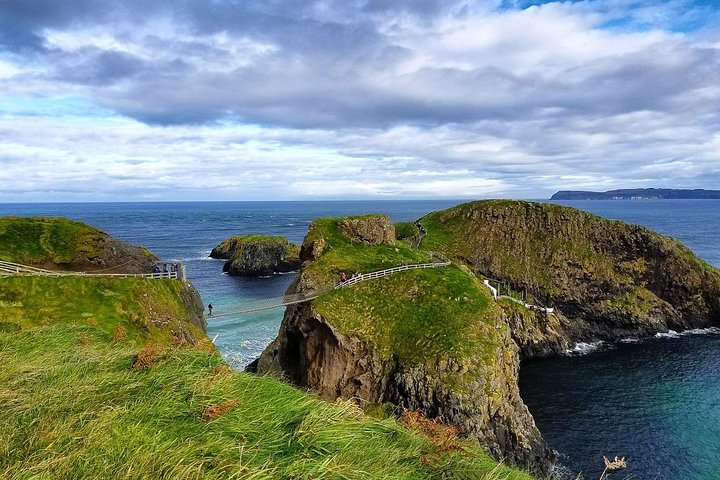
The Antrim coast between Ballycastle and the Causeway is the broader attraction — dramatic cliffs, castle ruins, sandy beaches, and the famous rope bridge at Carrick-a-Rede (a swaying rope bridge 30 metres above the sea, originally used by salmon fishermen). Most day tours include the coast drive and Carrick-a-Rede alongside the Causeway.
The Dark Hedges — an avenue of intertwined beech trees that became famous as the Kingsroad in Game of Thrones — is a common additional stop. The trees create a tunnel-like canopy that is atmospheric and photogenic.
Belfast is included on some day tours as a stop for lunch, a driving tour of the murals and political history, or a visit to the Titanic Belfast museum. The addition of Belfast makes the day significantly longer but adds a city dimension to the coastal and natural landscape.
Practical Tips
The day is genuinely long. Departing Dublin at 6:30–7:00 AM and returning at 8:00–9:00 PM is standard. The 4.5-hour drive each way is substantial. Comfortable seating on the tour vehicle matters — check the vehicle type when booking.
Northern Ireland uses pounds sterling, not euros. Card payments are accepted almost everywhere, but if you need cash, you will need sterling. Some shops near the Causeway accept euros at a less favourable rate.
Bring warm, windproof clothing. The Antrim coast is exposed and the Causeway is at sea level, fully exposed to Atlantic weather. Wind and rain are common even in summer.
Frequently Asked Questions
How far is the Giant’s Causeway from Dublin?
Approximately 460 kilometres, about 4.5 hours by road each way. A guided day trip runs 13–14 hours total.
Do I need a passport for the Giant’s Causeway from Dublin?
The Giant’s Causeway is in Northern Ireland (United Kingdom). EU/EEA citizens do not need a passport for the Dublin–Northern Ireland crossing (though carrying ID is advisable). Non-EU visitors should carry their passport as they are technically crossing an international border.
Is the Giant’s Causeway or the Cliffs of Moher better?
They are different experiences. The Cliffs of Moher are a sheer coastal wall — dramatic height and Atlantic views. The Giant’s Causeway is a geological formation — hexagonal columns you walk on at sea level. Both are exceptional. If you can only do one day trip, the Cliffs of Moher are closer (shorter day) and more visually dramatic at first sight. The Giant’s Causeway offers the coastal Antrim drive and the Northern Ireland context.
Can I combine the Giant’s Causeway with Belfast?
Yes — many day tours include a Belfast stop (typically 1–2 hours for a driving tour of the murals and/or Titanic Belfast). This makes the day longer but adds significant value.