




A Monastic Valley in the Wicklow Mountains
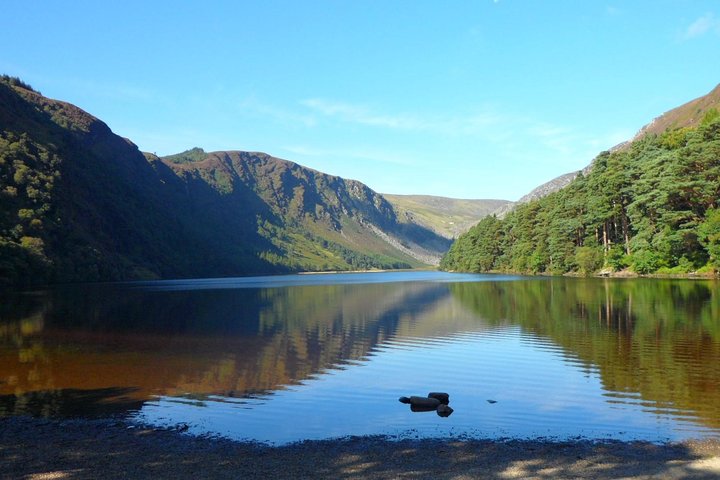
Glendalough (Gleann Dá Loch — “Valley of the Two Lakes”) is an early medieval monastic settlement in a glacial valley in the Wicklow Mountains, approximately 50 kilometres south of Dublin. The monastery was founded by St Kevin in the 6th century and became one of the most important centres of learning in Ireland, surviving Viking raids and fire before declining after the Norman invasion. The remains — a round tower (30 metres tall, one of the best-preserved in Ireland), stone churches, Celtic crosses, and a cathedral — sit in a valley between two lakes, surrounded by oak forest and mountain ridges.
Glendalough combines three things that make it one of Ireland’s essential sites: early Christian history (the monastic settlement), natural beauty (the glacial valley, lakes, and mountains), and accessible hiking (well-marked trails from easy lakeside walks to mountain ridge hikes). It is the closest major scenic destination to Dublin and the most popular half-day or full-day excursion from the city.
What You Will See
The monastic settlement includes the round tower (the iconic feature, visible from throughout the valley), the cathedral (ruined but with its gable ends standing), St Kevin’s Church (a small stone building with a distinctive steeply pitched stone roof), the Gateway (the original entrance to the monastic enclosure), and numerous Celtic crosses and grave slabs.
The Upper Lake is the more dramatic of the two lakes — set deeper in the valley with cliff faces on three sides and the ruins of a small church (Temple-na-Skellig) accessible by boat or lakeside path. This is where St Kevin is said to have lived as a hermit in a cave above the lake.
The Lower Lake is closer to the monastic settlement and the visitor centre. The lakeside walk between the two lakes (approximately 30 minutes each way) is flat, easy, and one of the most pleasant short walks in Wicklow.
The Wicklow Mountains surrounding Glendalough provide hiking options from easy valley walks to challenging mountain ascents. The Spinc walk (a ridge hike above the Upper Lake with panoramic views, approximately 3–4 hours) is the most popular hiking trail.
Tour Formats
Half-day tours from Dublin run 4–5 hours and focus on Glendalough — transport, a guided walk of the monastic settlement, and free time to walk to the Upper Lake. Some include a brief stop in the Wicklow Mountains en route.
Full-day Wicklow and Glendalough tours run 8–10 hours and combine Glendalough with wider Wicklow attractions — Powerscourt Waterfall or Gardens, the Wicklow Gap mountain pass, the village of Avoca (associated with the TV series Ballykissangel), or the Sally Gap mountain road.
The drive from Dublin passes through some of Wicklow’s most scenic landscape, and on guided tours the journey is narrated — covering the military road (built by the British Army after the 1798 rebellion to control the mountains), the peat bogs, the mountain passes, and the estate history of County Wicklow.
Frequently Asked Questions
How far is Glendalough from Dublin?
Approximately 50 kilometres, about 1–1.5 hours by road depending on the route. It is the closest major scenic and historical site to Dublin.
Can I combine Glendalough with other Wicklow sites?
Yes. Full-day tours typically combine Glendalough with Powerscourt, the Sally Gap, or Wicklow mountain drives. A half-day tour focuses solely on Glendalough.
Is Glendalough free to enter?
The monastic site and the valley walks are free and open year-round. The visitor centre (which has an exhibition and audiovisual presentation) has an admission charge.
Is Glendalough suitable for children?
Excellent for children. The valley walks are flat and easy, the round tower and ruins are visually engaging, the lakes provide open space, and the stories of St Kevin (including his legendary encounter with a blackbird) captivate young imaginations.